In order to understand, track, and contextualize alert level changes at
volcanoes around the world, we built the global Volcanic Alert Level
Information Database (VALID). The database contains information about 92
VAL systems from 32 countries. VAL systems differ in a number of ways,
most notably by the way levels are named, the domain that they apply to,
and the number of levels in the system.

VAL Systems
To browse or search VAL systems by country, use this link.
Jump to: Names, Domains, Number of Levels, Elements, Further Reading
VAL names
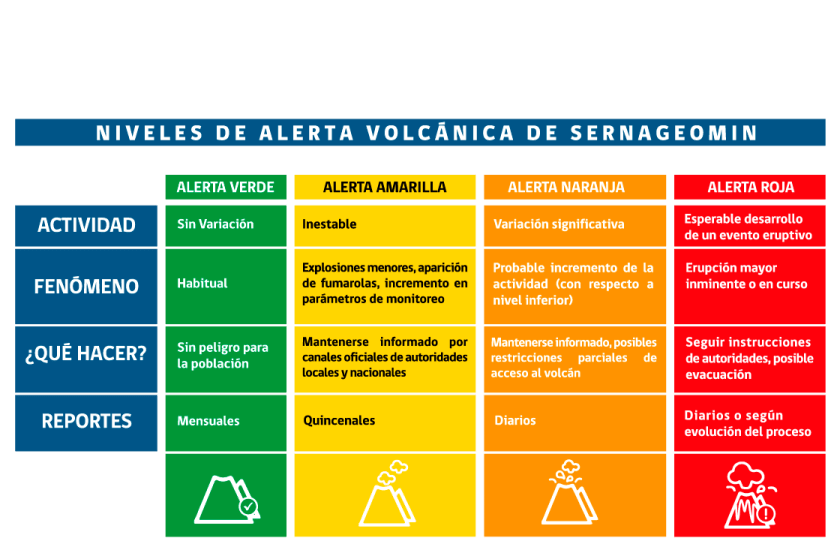
VAL names use colors (e.g. Red Alert), numbers (e.g., Level 1), words (e.g., Warning), or some combination of those. The majority of VAL systems use a color-name system (e.g., Level Yellow), with about half of those also incorporating words or numbers. Even systems that don’t use a color in the level name often use color-coding.


VAL domain
Most countries use an alert level system that applies to all areas near the volcano, but some issue specialized alerts for aviation or maritime domains. For example, Japan issues separate maritime alert levels for submarine volcanoes and Tonga issues terrestrial, aviation, and maritime alert levels. Many countries use standardized International Civil Aviation Organization (ICAO) aviation color codes (ACC) either in combination with local alert levels or as the only alert level system used.


